


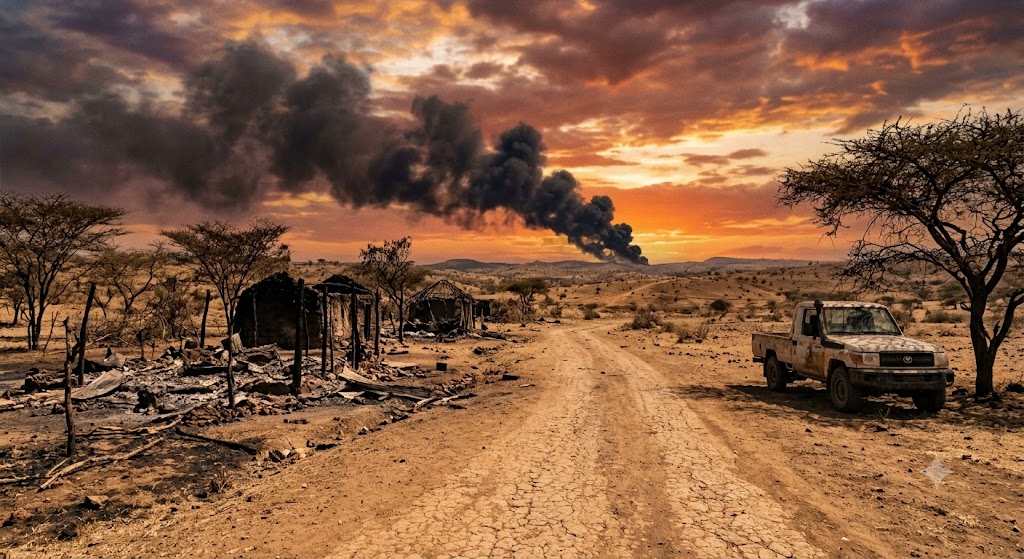
According to reports from the Karamara TV Facebook page, a serious confrontation recently occurred in the Goro Gutu district of East Hararghe Zone, Oromia Region, Ethiopia. Oromo residents have accused the Somali Regional State forces (Ciidanka Deegaanka Soomaalida) of launching an attack on their villages and setting approximately 20 homes on fire.
Details of the Incident and Media Response
The Oromo Media Network (OMN) reported that the Somali Regional forces carried out the attack in the Goro Gutu area, burning down about 20 residential houses. OMN is an independent media outlet based in Minnesota, USA, that focuses on news from the Oromo region. However, as of now, neither the Somali Regional State forces (DDS) nor the Ethiopian federal government has issued any official statement regarding the incident.
Historical and Broader Conflict Context
Goro Gutu is a district (woreda) in East Hararghe Zone, Oromia, which borders the Somali Region to the north. This area has long been a flashpoint for ethnic clashes. This latest attack is the most recent example of the ongoing tensions and violent confrontations between the Oromia and Somali regions.
- Patterns of Previous Attacks: Reports indicate that Somali Regional forces, including the special police unit known as the “Liyu Police,” have previously carried out attacks against Oromo civilians in Oromia, resulting in casualties and widespread displacement. For instance, there have been earlier accounts of Somali Regional forces attacking the Cinaaksan area in East Hararghe, killing at least six people and forcing many residents to flee their homes.
- Wider Conflict Dynamics: Similar incidents have occurred repeatedly over the years, often beginning as land disputes that quickly escalate into deadly violence. Analysts point out that such conflicts reflect deep-seated tensions inherent in Ethiopia’s ethnic-based federal system.
Information Vacuum and Growing Concerns
It is noteworthy that the silence from both the Somali Regional forces and the federal government regarding this latest attack has heightened concerns about the security situation in the area. The lack of official information also makes it difficult to independently verify the specifics of the event. This clash comes amid ongoing ethnic and land-related violence across various parts of Ethiopia, which has already displaced a significant number of civilians.
Conclusion
The Goro Gutu attack reported by Karamara TV marks another outbreak in the protracted ethnic conflict along the Oromia–Somali border. While serious allegations have been raised by Oromo sources and media, the absence of official responses from the parties involved means the full picture of the incident remains unclear. The event once again underscores the fragile peace in certain regions of Ethiopia and the urgent need for inter-communal reconciliation.